My church and I have been reading through the Bible this year. In this endeavor we have read Genesis, Mark, Exodus, Leviticus, Acts, and parts of Proverbs and Psalms. This has been extremely rewarding, and although it is time consuming, I have found ways to read/listen to everyday's reading. Today, we will begin a four day journey through the book of Hebrews. I can't wait.
Hebrews is a fascinating book. It may be the very best example of eloquent Christian writing. It exhibits a profundity I find to be in a class of its own.
In order to recall much of the information about Hebrews, I thought I would write about some of the finer points of this enthralling work. Much of this information is gleaned from a work by Norman Geisler.
Author
No one is quite sure who wrote the book of Hebrews. Many people have been proposed as the author, but no proposal fits the book perfectly. There are always some minor inconsistencies to the contents/style of the book with the proposed author. Most often, scholars propose Pauline authorship, while there can be a very good case made for Apollos being the author.
In any case, we can know some pretty important things about the author of Hebrews. This author is extremely educated. They exhibit a phenomenal command of the Greek language, while still being knowledgeable about the Old Testament Jewish system. This combination gives the book its amazing eloquence and style.
Purpose
Hebrews was written because Jewish Christians were considering going back to the Jewish way of life. They had experienced the beginnings of persecution because of their new faith, and this made them long for "the good ol' days" of the old Jewish system.
In tandem with the persecutions, many Christians began to wonder if Christ was sufficient. They doubted the saving power of Christ alone. When doubt crept in, they searched for new ways to ensure to themselves they would be saved. They wanted to substitute their own power for God's power, works for Grace, religion for relationship.
Main Theme
In my view, the theme of Hebrews can be summed up in one main theme: Christ is Better Than...! There are many different important things in the book, but it seems to me that all of these points surround one major interweaving theme. The author is using a sophisticated argument to show not only the sufficiency of Christ, but also the superiority of Christ. When he concludes the book there is no doubt that Christ is better than the old way of living, better than religion, works, and our own power.
Christ fulfills God's Requirements!
The first part of Hebrews focuses on the fact that Jesus fulfills what God required for the people and his servants. In this way Christ is able to be the best indicator of how to follow the one true God.
Christ is better than the Prophets! (1:1-4, Key Verse: 1:2)
This is the first thing Christ is better than. The prophets were the OT way of God's revealing plans to the Israelites. Without them the nation of Israel would not have known the requirements for holiness, repentance, or service to their Lord. There are not many things the Jews would hold higher than the prophets.
So, it could come as a shock to the readers of this letter that the author is so matter of fact about the superiority of Christ over the prophets. In the first four verses of Hebrews, the author makes it clear that the prophets can't hold a candle to Christ. The prophets could not fully communicate what God wanted to communicate to the people. But in Christ, we have the full explanation of the Father (John 1:18). No one has seen the Father, except through the Son. We have been given the full message of God the Father when Christ was incarnated.
No matter how effective the old way of revelation was, we now have the climax. Christ is the heir, the helper of creation. He is the living revelation!
Christ is better than angels! (1:4-2:18, Key Verse: 1:6)
The Jews knew angels were able to point out great ways of worshiping God. They were so beautiful, often people would be known to worship the angels instead of God.
The problem is that angels are only created beings. They are messengers sent by God, ministers of God. They are given their power by someone more powerful, more beautiful. The author of Hebrews asks why we should worship created beings when we can worship Christ?!?! Even the angels worship Christ! They know their betters. He is God!
Not only is this so, but Christ humbled himself to become lower than the angels in his incarnation. Ironically, this makes him even more worthy of our worship. He is the true Servant-Leader.
Christ is better than Moses! (3, Key Verses: 3:3-6)
Moses brought a type of salvation to Israel. He led them out of Egypt! Unfortunately, Moses was not powerful enough to save fully and the people were unable to persevere in this salvation. Moses led the people out of Egypt, the Red Sea, brought the ten plagues on Egypt... and on and on!!! But this power wasn't actually the power of Moses. This salvation wasn't the salvation of Moses. These were to show the Israelites who had the true power, and who would bring the true salvation.
Why settle for Moses, and his lack of salvific power, when you can have true salvation from Christ? Christ's power saves to the end. It will not be found wanting.
Christ is better than Joshua and the Sabbath! (4:1-13, Key Verses: 4:9-10)
After Moses was unable to bring about full salvation, the Israelites were promised true rest could be found after their forty years of wandering in the desert. Once they were sanctified, Joshua would bring them into the promised land, the resting place, the place God had always set aside for them. They would find Sabbath rest.
Unfortunately, Joshua was not capable of bringing the full Sabbath rest. Again the Jews disobeyed, they did not persevere. But Christ brings the full Sabbath rest. From Christ we receive the full inheritance. Why stick with Joshua (the one who saves) when we can be with Christ (the True Savior).
Christ fulfills what we need!
The second part of the book of Hebrews focuses on the fact of Christ being a better fulfillment of what humanity needs. In this way he was able to bridge the gap between God and man.
Christ is better than the Priesthood (4:14-7:28, Key Verses: 7:23-28)
In the Old Testament, the Priesthood functioned as a mediator for the people to God. These priests were human to represent humanity, and they made sacrifices on behalf of humanity to ask God for favor. Lamentably, the priests were not fully able to fulfill this function. The problem is two-fold. First, the priests die and therefore are unable to continue their work forever. Second, the priests are also sinners and therefore their representation is not enough.
But Christ lives forever and is perfect. Why do we settle for anything less? Christ is the perfect mediator.
Christ is better than the Tabernacle! (8:1-5, Key Verse: 8:2)
When God is instructing the Jews on the building of the Tabernacle the instructions are very detailed and very tedious looking. However, God is being so specific, because the Tabernacle is being made to be a direct reflection of the beauty of God. The tabernacle is the house of God, and it should be made in such a way so we can show God his true worth. Anything less than perfection and beauty would be an insult to him.
The problem is that the tabernacle is only a copy of the true beauty of God. It is built by man and it is destroyed by man. But Christ's tabernacle is perfect. It is built by God, not man, so it cannot be destroyed.
Christ is better than the Old Covenant! (8:6-9:22, Key Verse: 9:15)
One of the key themes of the Old Testament is that God has promised the Jews would bless the other nations of the world. In this, the Old Covenant, they would be a blessing to all other nations. The problem is the Israelites could not fully bless the other nations because they were fallen, and constantly disobeyed their God. The work they were able to accomplish was merely symbolic of the coming blessing.
Thankfully, Christ not only fulfills the Old Covenant, but he also surpasses it. When he died upon the cross, a New Covenant was given, sealed by his blood. He died to pay the price, which gives us the opportunity to receive; for all nations to gain the blessing. The inheritance of the children of God is available to us.
Christ is better than the Sacrifices! (9:23-10:39, Key Verse: 10:12, 14)
As a result of man's sinfulness, he is utterly disgusting before God. Sin taints everything it emanates from. Therefore, it is necessary for man to be purified. In order to do this, God implemented the sacrificial system. The sacrifices were a way for man to become clean before God. Unfortunately, these sacrifices made them cleaner, but not clean. The purification did not last long, they were made in a corrupted sanctuary, and they were only representations of the true sacrifice.
Thankfully, Christ is the perfect sacrifice, and his sacrifice is forever. His blood is the perfect purification, instead of "cleaner" man can now be "clean."
Why Go Back?
Christ is the perfect fulfillment of the whole Jewish system. This foundation was continually pointing to him. Is there anything better than Christ? Why go back to the old ways? Why live as though we don't have him?
We shouldn't drift (2:1-4), doubt (3:7-19), become dull (5:11-14), depart (6:1-20), despise (10:26-39), or deny (12:18-29) the superiority of Christ!
But what should be our response??? In the closing chapters of Hebrews, the author explains that because Christ is superior we should go all out for him. We should give our all to him. We should go all out in Faith (11), in Hope (12), and in love (13:1-17)
Why go back? Instead go all out!
Showing posts with label Bible. Show all posts
Showing posts with label Bible. Show all posts
Tuesday, March 1, 2011


Wednesday, April 21, 2010
Biblical Interpretation in a Nutshell

Patton has suggested there are really only 3 steps to correct interpretation: Exegetical Statement (What It Meant To Them), Theological Statement (What It Means To Everyone) and Homiletical Statement (How This Applies To Me). These actually are basically the same steps I advocate said in a different way. However, Patton has been working at this longer than I, and therefore has much insight and experience I cannot give.
It seems to me, that many (not all) of the problems we have when reading the Bible would be solved, if we just read it more carefully.
I highly recommend giving this post a read through.
Tuesday, April 13, 2010
On Reading the Bible (Well) pt 2
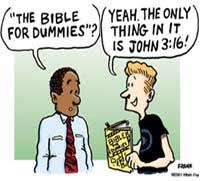 A few days ago I wrote about reading the Bible well. I have noticed people have not been taught how to read the Bible for everything it gives. Instead we are stuck in a world of privatization, where the only application from scripture is for the individual. The problem with this is God revealed the Bible for everyone. Scripture has an original meaning, and we need to understand what God's intention for the message was. Without this we can fall into the trap of internal faith without any real base to stand on.
With this in mind we looked at Revelation 3:14-22. We discovered many people misinterpret this passage, and it can be disastrous for some believers. I have actually heard pastors say God would rather us be completely against Him if we are not going to be "on fire" or "sold out" for Him.
We examined the passage and found, within the context of the time, this is probably not what God was saying at all! Instead, God wants us to stay close to Him the source of being cool and refreshing, or hot and therapeutic. Jesus was using a cultural aspect to show the citizens of Laodicea that they were not close to Him anymore. No, they were far from Him, like lukewarm water, they tasted nasty to Jesus.
How can we avoid this problem? How should we read the Bible?
I have found there are 5 basic, and easy, steps to be able to read the Bible well.
1. Read the passage!
Read the whole passage. Don't just read a verse. Verses are meant to be seen in the larger context of a message.
2. Understand to whom it is being written.
If the passage is directed to exiled Israelites, it might have different cultural considerations then if it was written to brand new Christians in the 1st century.
3. Determine what God was saying to the people He was speaking to.
With the context and culture in mind we can probably understand more about what God was telling them.
4. Seek out and extract the transcendent (timeless) principles.
As mentioned earlier, God's word is written for everyone. It is sufficient for a knowledge of saving grace. If we can see both the cultural and scriptural context then we can see what is the principle God is communicating to everyone.
5. Apply this transcendent principle to the culture and life you live.
We can take what God has told everyone, and apply it to the ways we live. This will ensure we are at least trying to connect with the body of believers.
Christianity is not a private religion. It does have private aspects, but always within the context of the community/church (the body of believers). In order for this to work, we need to see what God wants everyone to know.
Wednesday, March 24, 2010
Correct Interpretation
Aaron at Apologetics Junkie has posted a great article on why a correct process of Biblical interpretation is essential when studying a text. I thought it would be good to link to it in light of my On Reading the Bible (Well) series.
The article explains why Christians in America should not believe 2 Chronicles 7:14 promise of a healing on the land apply to America. This verse is often taken out of context and Christian's misinterpret the verse in a How Does This Apply to Me Hermeneutic. Instead, we should use a What Does This Teach Me About God Hermeneutic. If we realize the Bible is about God, then we will often avoid the trap of mistaken interpretation.
A correct interpretation of this verse and it's larger context does not mean God cannot heal America's land, but rather that God has not promised this to America there. He certainly can heal our land, but a correct interpretation of the passage would caution anyone to be certain of this.
The article explains why Christians in America should not believe 2 Chronicles 7:14 promise of a healing on the land apply to America. This verse is often taken out of context and Christian's misinterpret the verse in a How Does This Apply to Me Hermeneutic. Instead, we should use a What Does This Teach Me About God Hermeneutic. If we realize the Bible is about God, then we will often avoid the trap of mistaken interpretation.
A correct interpretation of this verse and it's larger context does not mean God cannot heal America's land, but rather that God has not promised this to America there. He certainly can heal our land, but a correct interpretation of the passage would caution anyone to be certain of this.
Thursday, March 18, 2010
On Reading the Bible (Well) pt 1
Too many of my students have no idea how to read the Bible (well). Unfortunately, this is not limited to younger students, but most people don't read the Bible for all it is worth.
We have privatized our religion so much we do not understand the principles in the Bible are meant for everyone, not just a subjective interpretation. We explain what the Bible means in light of what we already believe, or in light of a wrong interpretation because of our cultural influences, not the intended culture.
There are so many examples of this it is hard to pick just one, but if I must, I must.
Today's culture loves to say we "want to be on fire for God." I have no problem with people wanting to be on fire for God. In fact, in light of what that means in today's society, I think being on fire for Him would be a very good thing.
Unfortunately, we should not let this kind of cultural context skew the principles set forth in the Bible.
In Revelation 3:14-22, John writes the words of Jesus to the church in Laodicea. Christians commonly misinterpret this passage and come to what can be a disastrous conclusion based on this misinterpretation. The main verses in question are 15 and 16:
"I know your deeds, that you are neither cold nor hot. I wish you were either cold or hot! So because you are lukewarm, and neither hot nor cold, I am going to vomit you out of my mouth!"
The common interpretation of this passage is that God wants us to be "on fire" for Him, or not for Him at all. Can you see where our cultural influence comes in? Do you think all cultures have used "on fire" to mean spiritual fervor for God? Is God really saying He would rather have people against Him completely, then to mess up and only try to follow Him sometimes?
Horribly, believers have bought into this interpretation of the passage, but this is probably not what it means!
Laodicea was a landlocked city. They had no water source of their own. Because of this they needed to pipe in their water from two nearby towns, Colossae and Hierapolis. The water in Hieropolis was warm and used as medicine. It came from a natural hot spring. The water in Colossae was cool and refreshing. You might think of a cool mountain spring.
Laodicea did not have either warm or cool water. Instead, by the time the water reached Laodicea, it would be lukewarm and nasty. This is the kind of water people might actually spit out.
With this in mind it makes much more sense to see the passage as meaning we should stay close to our source (God) and do the job he has given us. We can be people who are refreshing, or people who heal, but if we stray from our source (again God) we will become lukewarm and nasty. Does God want us to be "on fire" for Him? Of course, but He also doesn't say he would rather us be against him if we are not "on fire."
The study of this passage has made it obvious we need to be more careful to interpret passages correctly, in the context they were intended.
We have privatized our religion so much we do not understand the principles in the Bible are meant for everyone, not just a subjective interpretation. We explain what the Bible means in light of what we already believe, or in light of a wrong interpretation because of our cultural influences, not the intended culture.
There are so many examples of this it is hard to pick just one, but if I must, I must.
Today's culture loves to say we "want to be on fire for God." I have no problem with people wanting to be on fire for God. In fact, in light of what that means in today's society, I think being on fire for Him would be a very good thing.
Unfortunately, we should not let this kind of cultural context skew the principles set forth in the Bible.
In Revelation 3:14-22, John writes the words of Jesus to the church in Laodicea. Christians commonly misinterpret this passage and come to what can be a disastrous conclusion based on this misinterpretation. The main verses in question are 15 and 16:
"I know your deeds, that you are neither cold nor hot. I wish you were either cold or hot! So because you are lukewarm, and neither hot nor cold, I am going to vomit you out of my mouth!"
The common interpretation of this passage is that God wants us to be "on fire" for Him, or not for Him at all. Can you see where our cultural influence comes in? Do you think all cultures have used "on fire" to mean spiritual fervor for God? Is God really saying He would rather have people against Him completely, then to mess up and only try to follow Him sometimes?
Horribly, believers have bought into this interpretation of the passage, but this is probably not what it means!
Laodicea was a landlocked city. They had no water source of their own. Because of this they needed to pipe in their water from two nearby towns, Colossae and Hierapolis. The water in Hieropolis was warm and used as medicine. It came from a natural hot spring. The water in Colossae was cool and refreshing. You might think of a cool mountain spring.
Laodicea did not have either warm or cool water. Instead, by the time the water reached Laodicea, it would be lukewarm and nasty. This is the kind of water people might actually spit out.
With this in mind it makes much more sense to see the passage as meaning we should stay close to our source (God) and do the job he has given us. We can be people who are refreshing, or people who heal, but if we stray from our source (again God) we will become lukewarm and nasty. Does God want us to be "on fire" for Him? Of course, but He also doesn't say he would rather us be against him if we are not "on fire."
The study of this passage has made it obvious we need to be more careful to interpret passages correctly, in the context they were intended.
In part two we will learn the easy steps to remember what to do in studying a passage.
Subscribe to:
Posts (Atom)


